






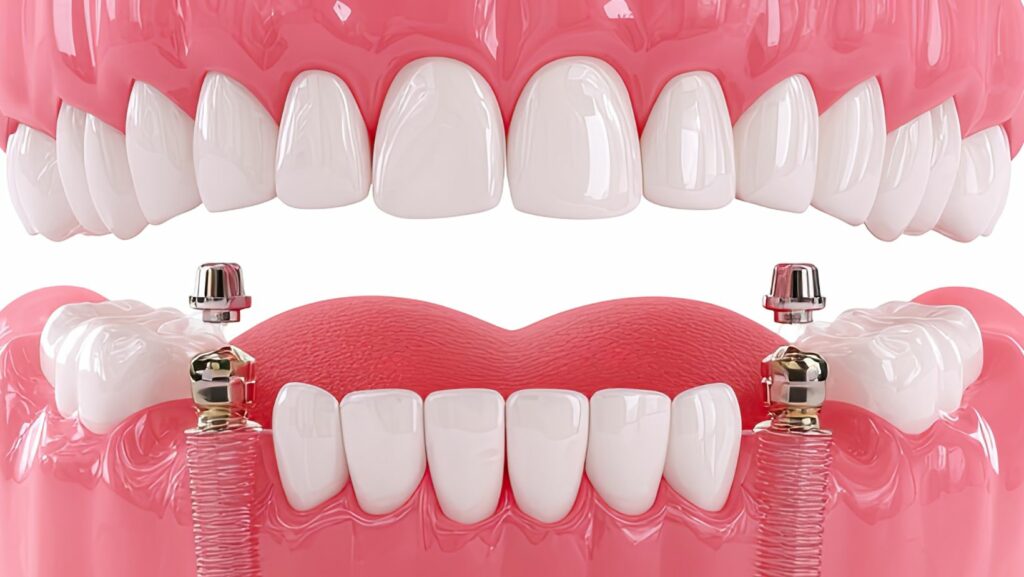
If you struggle with loose or uncomfortable dentures, denture implants in Minot give you a much more secure option that feels and works closer to natural teeth. They anchor your denture to dental implants so your teeth stay in place while you eat, speak, and smile.
This article will explain what denture implants are, why many people in Minot choose them over traditional dentures, how the procedure works locally, and how to care for your new teeth so they last. You’ll get clear, practical facts to help you decide if denture implants fit your needs and budget.
What Are Denture Implants?
Denture implants anchor dentures to titanium posts placed in your jaw. They give you a stable bite, reduce slipping, and help keep jaw bone healthy.
Definition and How They Work
Denture implants are small titanium posts surgically placed into your jawbone. Over several months, your bone fuses to the implants in a process called osseointegration. This creates a strong base similar to natural tooth roots.
After healing, your dentist attaches a denture or an overdenture to the implants. Attachments can be ball‑style snaps, bars, or fixed screws. You bite and chew with much more force than with traditional dentures. You also avoid denture paste and reduce sore spots because the denture does not press directly on your gums.
Types of Denture Implants
You will see two main setups: implant‑retained removable dentures and fixed implant bridges.
- Implant‑retained removable dentures: 2–4 implants hold a denture that snaps on and off. You remove it for cleaning at night.
- Fixed implant bridges: 4–8 implants support a permanent arch that you cannot remove. Your dentist only removes it during maintenance.
Other variations include mini implants (smaller diameter) used when bone is limited. Your dentist will recommend a type based on bone quality, budget, and whether you want a removable or permanent solution.
Comparison to Traditional Dentures
Traditional dentures rest on your gums and rely on suction, adhesives, or fit. They can slip, cause sore spots, and reduce chewing force. Traditional dentures also allow bone loss over time because they don’t stimulate the jaw.
Denture implants stabilize the denture, letting you eat firmer foods and speak with less worry about movement. Implants help preserve bone and reduce facial collapse. They require surgery, longer healing, and higher upfront cost, but they often last longer and improve function compared with standard dentures.
Benefits of Denture Implants in Minot, ND
You get a firmer fit, better chewing and speaking, and protection for nearby teeth and jaw bone. These changes make daily life easier and reduce future dental problems.
Improved Stability and Comfort
Denture implants lock your denture to titanium posts placed in your jaw. That prevents slipping and stops the need for adhesives.
You feel less rubbing on your gums. Soft tissue soreness and ulcers from moving dentures become much rarer.
Implant-supported dentures sit closer to the jaw, so they don’t rock when you chew or talk. This gives you more confidence in public and while eating.
If you choose a fixed implant bridge, you won’t remove the denture daily. If you choose a snap-on removable option, you can take it out for cleaning but still enjoy a secure fit while you wear it.
Enhanced Chewing and Speaking
Implant-supported dentures let you bite with far more force than traditional dentures. You can eat firmer foods like apples, steak, and raw vegetables with less worry.
Improved bite strength reduces the need to alter your diet. That helps you get better nutrition without avoiding certain foods.
Speech improves because the denture stays in place, which keeps your tongue and lips in their normal positions. You’ll notice fewer slurred words and less need to repeat yourself.
Both fixed and snap-on options preserve natural mouth movement. That makes conversations and meals more natural and less tiring.
Long-Term Oral Health Advantages
Implants act like tooth roots and transmit chewing forces to the jaw bone. That stimulation slows the bone loss that normally follows tooth loss.
Preserving bone keeps your facial profile firmer and prevents the sunken look that can come from long-term denture wearing. It also helps retain a better fit for future restorations.

Implant-supported dentures protect nearby teeth because they don’t rely on adjacent teeth for support. That lowers the risk of damaging healthy teeth used to anchor traditional bridges.
With regular care and checkups in Minot, implant restorations can last many years. That reduces the need for frequent denture relines and replacements.
The Denture Implant Procedure in Minot, ND
You will learn what to expect from your first visit through surgery, recovery, and payments. Clinics in Minot coordinate care with oral surgeons and restore implants in the dental office, so you will have support at every step.
Initial Consultation and Candidacy
At your first visit, the dentist or clinic will review your medical history and take 3D imaging or panoramic X-rays to map your jawbone. They will check bone height and density to confirm you have enough support for implants. If bone is thin, they may recommend a graft or a different implant type.
Expect a full oral exam and a discussion of your goals. The team will explain implant-supported dentures versus fixed options and show timelines. They will also review medications, smoking status, and chronic conditions because these affect healing and success.
You will receive a written treatment plan that lists the number of implants, expected timeline, and alternative options. Ask about sedation choices, the roles of the oral surgeon and your restorative dentist, and any pre-surgery instructions.
Surgical Process and Recovery
A local oral surgeon usually places the titanium implants in the jaw during an outpatient procedure. You may get local anesthesia, nitrous oxide, or IV sedation depending on your preference and medical needs. Surgery typically lasts one to two hours per arch.
After placement, healing (osseointegration) takes 3–6 months as bone fuses to the implant. You will have follow-up visits to check healing and to place temporary dentures if needed. Expect swelling, mild pain, and soft-food diet for several days. Your provider will give pain meds, antibiotics if indicated, and care instructions.
Once healed, the dentist attaches abutments and fits the final denture. They will adjust bite and fit across a few appointments to ensure comfort and function. Routine follow-up and good oral hygiene keep implants healthy.
Expected Costs and Insurance Options
Costs vary by clinic, number of implants, need for bone grafts, and type of denture. In Minot, single-arch implant overdentures with two to four implants often cost less than full fixed-arch restorations that require more implants. Ask clinics for an itemized estimate showing surgery, prosthesis, imaging, and follow-up.
Many dental insurances cover part of the restorative work but not the implants themselves. You should ask your office to submit a pre-treatment estimate to your insurer. Clinics often offer payment plans, third-party financing, or in-house financing to spread costs.
Request written pricing from each clinic you consult. Compare what each estimate includes—surgical fees, lab fees, temporary prostheses, and post-op visits—so you can choose the option that fits your budget and needs.
Caring for Your Denture Implants
Keep your implant-supported dentures clean, check the attachment points, and follow a regular visit schedule to protect your implants and gum health.
Daily Maintenance Tips
Clean your denture implants every morning and night. Use a soft-bristled toothbrush and low-abrasive toothpaste or a denture-cleaning paste to brush the prosthetic surfaces and the areas where the denture meets the gum. Rinse after meals to remove food particles.
If your denture snaps on to implant abutments, remove it nightly unless your dentist tells you otherwise. Soak removable dentures in a denture-cleaning solution approved by your dentist, and brush the abutments gently with a dry toothbrush to remove debris.
Floss or use an interdental brush around implant posts daily. A water flosser can help flush out trapped food and reduce plaque around the implant collars. Watch for redness, swelling, or persistent bad taste; report these signs to your dentist right away.
Recommended Follow-Up Visits
Schedule a check with your dentist 1–2 weeks after placement to confirm fit and healing. Your provider will check the soft tissue, the implant sites, and how the denture attaches.
Plan routine follow-ups every 3–6 months during the first year. These visits let the dentist tighten loose attachments, remove hardened deposits, and monitor bone and gum health with exams and X-rays if needed.
After the first year, most patients move to six-month or annual exams depending on health, hygiene, and implant condition. Keep all scheduled appointments and bring a list of any problems — looseness, soreness, changes in bite, or persistent discomfort — so your dentist can act quickly.