






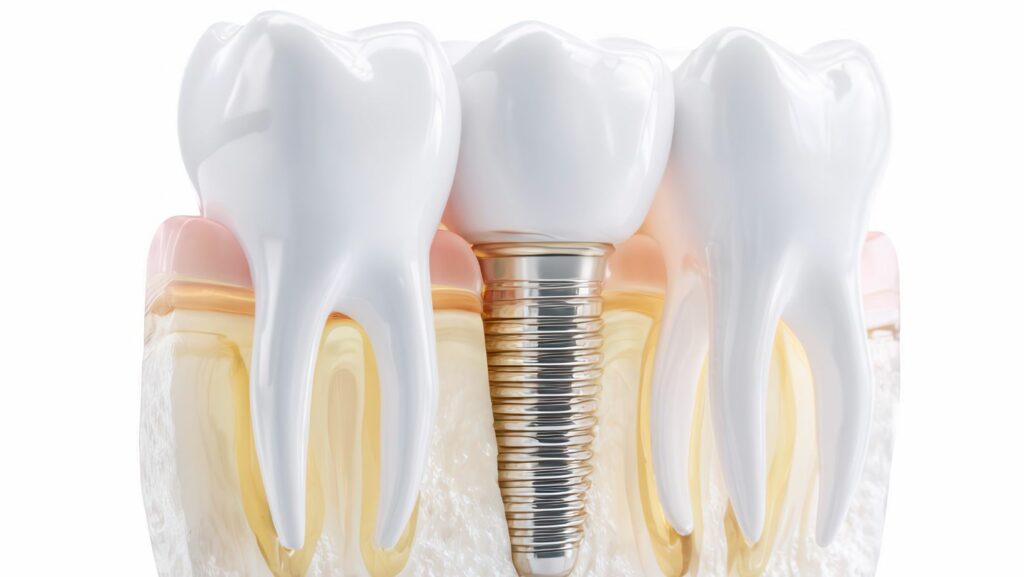
Losing one tooth can change how you chew, speak, and smile, but you don’t have to accept those problems. A single tooth implant can restore the look and function of that missing tooth by replacing the root and crown, often preventing shifting teeth and jawbone loss.
This post will walk you through what a single tooth implant is, who makes a good candidate, what to expect during treatment, and how to care for your implant for long-term success. You’ll learn practical next steps so you can decide if this solution fits your needs.
Understanding Single Tooth Implants
You will learn what a single tooth implant is, which parts make it work, and how it compares to bridges or dentures. This helps you decide if an implant fits your needs and what to expect from the procedure.
What Are Single Tooth Implants
A single tooth implant replaces one missing tooth from root to crown. A small titanium post is placed in your jawbone where the tooth root used to be. Over several months the bone grows around the post in a process called osseointegration. This creates a stable base for a custom crown that matches your other teeth in color and shape.
You typically need healthy gums and enough jawbone for support. If your bone is thin, your dentist may suggest a bone graft first. The procedure normally involves placement, healing time, and then attaching an abutment and crown.
Key Components and Structure
Single tooth implants have three main parts:
- Implant body (titanium post): anchors in the jawbone.
- Abutment: small connector that sits above the gum line.
- Crown: the visible tooth-shaped cap made from porcelain or ceramic.
The implant body fuses with bone to act like a natural root. The abutment screws into the implant and supports the crown. Crowns are custom-made to match your bite and color. Materials matter: titanium is widely used for strength and bone compatibility. Crowns often use porcelain for a natural look.
Care for your implant like a natural tooth: brush, floss, and see your dentist regularly. Proper care lowers the risk of gum infection and implant failure.
How Single Tooth Implants Differ from Other Solutions
Unlike a bridge, an implant does not require grinding down adjacent healthy teeth. Bridges anchor to neighboring teeth, which can weaken them over time. Dentures sit on the gums and can slip; they may also speed bone loss where teeth are missing.
An implant preserves bone because the post stimulates the jaw like a natural root. Implants often last longer than bridges or removable dentures when you keep good oral hygiene. However, implants require surgery and more upfront cost. You must also meet medical and bone-health criteria, so a dentist will evaluate X-rays, your gum health, and medical history before recommending an implant.
Benefits of Replacing One Tooth
Replacing a single missing tooth can improve how you chew, speak, and smile. It also helps keep nearby teeth and bone healthy so future problems are less likely.
Restoring Function and Aesthetics
A single implant restores biting force by acting like a natural root. You can chew normally on that side again, which helps you eat a wider variety of foods without shifting your jaw to compensate. Implants also stabilize the bite, reducing wear on teeth across from the gap.

A well-matched crown looks like your natural tooth. Your dentist will match color, shape, and height so the new tooth blends with adjacent teeth. This improves your smile and may boost confidence when you talk or smile in photos.
Preventing Bone Loss
When a tooth is missing, the jawbone in that spot receives less stimulation and can shrink over time. A titanium implant transmits chewing forces into the bone, which helps maintain bone volume and density.
Keeping bone height stops nearby teeth from tilting into the gap. It also preserves the jaw shape that supports your lips and face. This lowers the chance you’ll need more complex bone grafting later.
Protecting Adjacent Teeth
An implant does not rely on neighboring teeth for support. Unlike a bridge, it leaves adjacent teeth untouched so you don’t need to file healthy tooth structure.
Keeping those teeth intact reduces long-term risk of decay or sensitivity caused by crown preparation. It also simplifies future dental care: if something happens to the implant, you can treat it without affecting adjacent restorations.
Candidacy and the Treatment Process
You will learn who usually qualifies for a single tooth implant, how your mouth gets evaluated, and what happens during placement and healing. These steps focus on health, bone support, and clear timing so you know what to expect.
Ideal Candidates for Single Tooth Implants
You qualify if you have one missing tooth and healthy gums. Your jawbone must have enough height and width to hold an implant, or you may need a bone graft first.
Good overall health matters. Conditions like uncontrolled diabetes or heavy smoking can raise the risk of implant failure. Your dentist will want controlled medical issues and a plan to reduce smoking before treatment.
Age matters less than growth and bone health. Adults whose jaw growth is complete make the best candidates. You should also commit to daily oral hygiene and regular dental visits to protect the implant long term.
Evaluation and Planning
Your dentist will take X-rays or a CBCT scan to measure bone volume and check nearby nerves and sinuses. These images guide implant size, angle, and whether grafting is needed.
You will get a treatment timeline and cost estimate. The plan lists steps: any grafting, implant surgery, healing time, abutment placement, and final crown. Ask about anesthesia options and who will place the crown.
The team will record your bite, gum thickness, and tooth shape to match the crown to neighboring teeth. Clear instructions about antibiotics, smoking, and medicines may improve your outcome.
Implant Placement and Healing
Your surgeon places a titanium implant into the jawbone during a short procedure under local or local plus sedation. You may have a temporary crown or a healing cap placed that keeps the site clean.
Bone needs time to fuse to the implant (osseointegration). Expect 2–4 months in the lower jaw and 3–6 months in the upper jaw, unless immediate loading is possible and safe for you.
Follow post-op rules: avoid hard chewing on that side, keep the area clean, and take prescribed meds. Regular check-ups confirm bone healing. Once stable, your dentist attaches an abutment and a custom crown to restore function and appearance.
Long-Term Results and Care
Single-tooth implants often last many years when placed and cared for properly. You should expect stable chewing, preserved bone at the site, and occasional crown replacement for wear or appearance.
Expected Outcomes and Durability
Most single-tooth implants show high survival rates over decades when you have good bone and no uncontrolled health issues. Titanium implants integrate with your jawbone and can stay firm for 10–40+ years; crowns may need replacement sooner for wear or color changes. Factors that lower durability include smoking, untreated gum disease, poor bone volume, and uncontrolled diabetes. Regular checkups let your dentist spot bone loss, loose parts, or crown problems early. Ask your dentist about records they keep for your implant so issues can be tracked over time.
Oral Hygiene and Maintenance
Daily cleaning matters. Use a soft toothbrush, low-abrasive toothpaste, and interdental brushes or floss to remove plaque around the implant and abutment. Avoid hard scrubbing that can roughen surfaces. Professional cleaning every 3–6 months is typical if you have risk factors; otherwise, every 6–12 months is common.
Follow these care steps:
- Brush twice daily and clean between teeth once daily.
- Use an interdental brush sized to the gap; gentle circular motions work best.
- Report bleeding, swelling, or loosening to your dentist right away.
Keep medical conditions controlled and avoid tobacco to protect the implant long term.